
A field is more than its surface
A photograph of a rice field shows a broad sheet of water and green plants. It cannot tell a reader everything about the water below the soil surface, how the field changed yesterday or what a grower needs to decide tomorrow. That gap is where measurement becomes interesting.
The fashionable version of this story begins with a wireless sensor and a dashboard. A more useful version begins with a question: which change are we trying to observe, and what decision would a reliable observation support? A device becomes meaningful when those two things are connected.
A tube before a dashboard
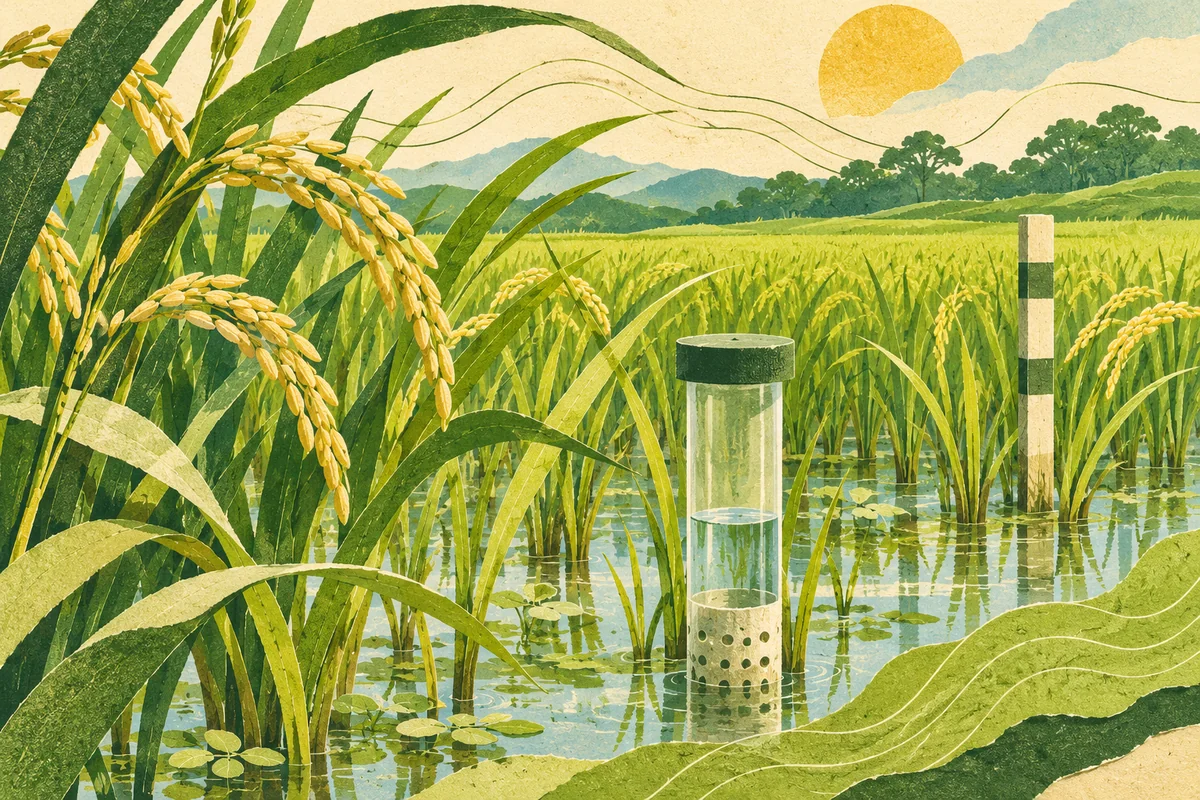
IRRI’s discussion of rice-soil management describes a field water tube that lets a grower observe the water table. It places that measurement within alternate wetting and drying, where irrigation is managed through periods with differing water conditions. IRRI also explains that conditions depend on factors including soil, weather and crop stage.
That modest tube illustrates a wider design principle. An observation does not need a glamorous interface to be useful. A connected instrument could make a reading easier to collect or share, but the instrument still needs a defined location, a meaningful reference and a way to check whether its reading is trustworthy.
This article explains the reading problem rather than prescribing an irrigation schedule. A threshold or timing recommendation needs the relevant crop, soil and local water-management guidance. A number copied from one description should not become an automatic instruction for every field.
Source: IRRI Rice Today: Healthy Soils, Healthy Rice, 4 December 2024
Give the number a place and a time
Imagine an invented monitoring log with a reading, a timestamp and a short note about rainfall or an irrigation event. That extra context helps a reader interpret a change. Without it, a lower value might be mistaken for a trend when the observation was made in a different place or under different conditions.
Before celebrating a new dashboard, ask how its measurement is checked. Does someone compare it with a separate observation? Is the location documented? Can a user tell the difference between an old reading and a fresh one? What happens when a device stops reporting? These are practical questions about the information system, not claims about a specific product tested by this publication.
What would count as a useful improvement?
A sensible evaluation separates easier observation from an improved farm outcome. Faster access to a reading is one result. A change in water use, crop performance or labour is a different result that needs its own measurements and a suitable comparison. An appealing screen does not establish all of them at once.
The next time a field-sensor story catches your eye, look for the question behind the device. What was measured, where, when, and against what reference? Those details turn a technology announcement into something a reader can examine. Sometimes the most revealing object in a field is a simple tube that makes a hidden condition visible.