
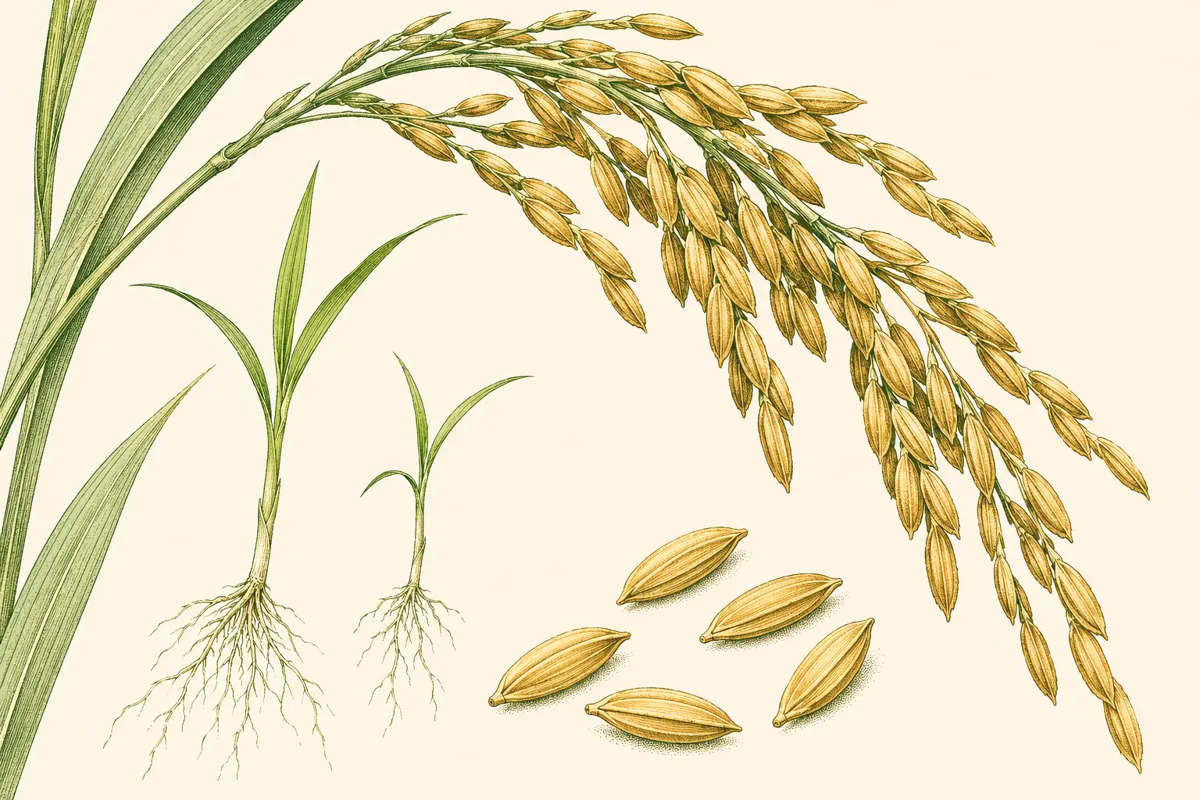
A research programme with a defined end
The European Commission identifies HerbaRice as grant 897192 under the Marie Skłodowska-Curie programme. The project period was 16 November 2020 to 15 November 2023; CORDIS now marks it closed. The coordinator was Türkiye’s Ministry of Agriculture and Forestry, with the Regents of the University of California listed as a partner.
The project investigated a non-transgenic source of herbicide resistance in rice. Its purpose was to expand the research options for managing weedy rice. That aim should be read as a research objective, not a statement that a finished variety became available to growers.
Keep the result separate from the ambition
The final periodic report describes low-dose-resistant material, but says high-dose resistance suitable for commercial use was not achieved. This qualification belongs beside the project’s ambition. It is an essential part of the result, not a detail to remove from a successful-looking summary.
A selected plant, a reproducible resistance trait, a breeding line and a commercially usable cultivar answer different questions. Moving between those stages requires additional evidence. Our results note explains why the distinctions matter when reading the public record.
What this edition preserves
The former project’s subject addresses, publication trail and institutional context remain available here. Historical team and event pages are presented as dated records. New illustrations are editorial artwork, not photographs from the experiments. The original project’s funding and affiliations do not describe this independent edition.